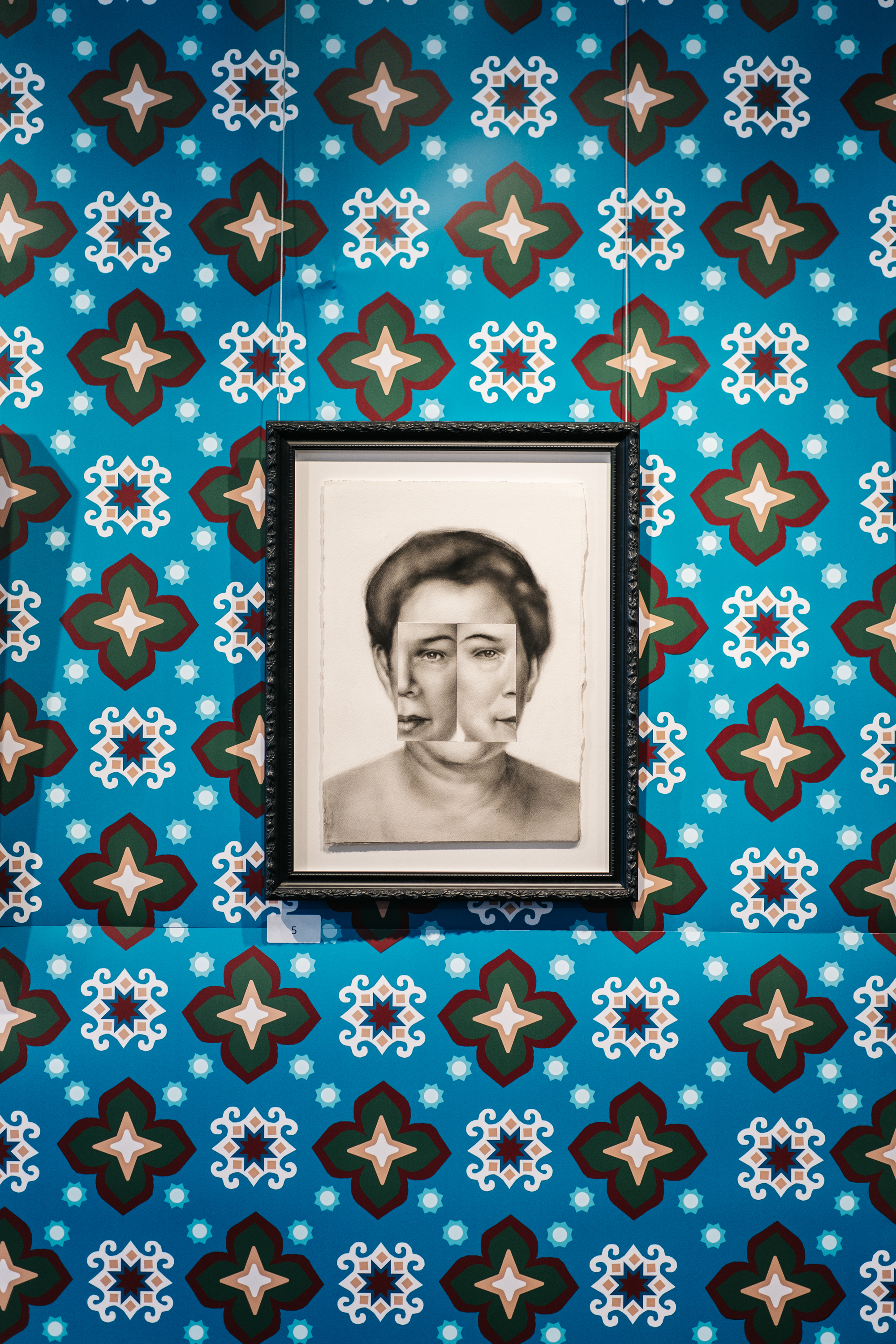
2025 unfolded under the sign of the snake — a year of shedding skins, exposing dualities, tasting forbidden fruit even when the cost was knowing too much. There is a Burmese proverb မြွေမှ မြွေခြေထောက်ကို ကြည့်ပါ။ that translates to: “Snake to snake — look for the legs.” A warning against deception, against mistaking appearances for truth, and how evil powers have more in common than we realise. This phrase followed me all year.
Globally, the masks fell. Superpowers continued to bankroll dictatorships. Genocides continued — livestreamed into our devices. Recently in Burma, a sham election staged by a military junta that has ruled through violence for over 60 years has become another cruel performance of legitimacy. A country with the highest number of displaced people in the world, stripped of freedom of speech, punished for naming the truth.
Living in the relative ‘safety’ of Australia, it became impossible to look away. I made work about survivor’s guilt, about the voyeurism we are all implicated in — watching genocide play out in real time, scrolling, witnessing, surviving. Oppression hits hardest when it is only one degree of separation away. By chance, by migration, by history, I am here — not there. That knowledge stayed with me, heavy and unresolved.

1. Two opposing truths can coexist
This was also the year I learned that grief and gratitude are not opposites. There were months balanced on the brink of burnout — juggling my art practice, tutoring Creativity and Innovation at the University of Western Australia, and untangling myself from a marketing career I had studied for and succeeded in, but never loved.
The transition into a project-based role working directly with regional BIPOC artists, arts development, mental health outcomes, and community-led creative practice felt like crossing a long-awaited threshold. It is rare to find work that aligns so cleanly with values. This year taught me that despair and confusion about the state of the world and clarity about one’s vocation can coexist. I’ve come out the other side not naïve — but awake, eyes wide open.

2. Belonging is a feeling, not a destination
Travelling to Bauingyu Country to document the Seaside Dancers for the Jamba Nyinyani Festival was one of the most grounding experiences of the year. A 5-day roadtrip with my mum and my nieces — three generations witnessing something unforgettable and genuine.
For the first time in my life living in WA, I felt genuinely welcomed on stolen land. Not tolerated — welcomed. That acceptance, offered by First Nations elders, community and the land, is not something I take lightly. It is a feeling that lingers in the body long after the moment passes. I carry immense gratitude for that generosity.

3. Creative work needs a home
This year I moved into a studio that feels like a home for my work. Finding this space felt like an anchor — a quiet but significant turning point of dedicating space to let my creative world breathe.

4. Stories become powerful when they are shared
Organising arts activities for Hakaya of Home for Bukjeh’s tour in Boorloo was one of the most meaningful acts of collective storytelling I’ve been part of.
Stories of exile and belonging, joy and resistance, land and memory took centre stage — stories that are so often pushed to the margins. People sang, cried quietly, brought their children, held space for one another. It reminded me that storytelling is not passive. Art as an act of survival.

5. Cultural stories must be carried with care
I painted my first public art mural this year, funded by the Town of Victoria Park. More importantly, it allowed me to share the Panakawan stories of the Javanese community in Perth — a 12th Century year-old tradition of political satire, humour, and resistance.
To translate such layered cultural narratives into public art was an honour and a responsibility. Public art, when done with care, becomes a vessel — holding memory, critique, and belonging in plain sight. Thank you to Batavia Corner for allowing me to share your culture.

6. Adventure can be the best form of rest
After months of busyness and skirting burnout, the city offered a reset through immersion rather than escape. Moving between ancient spaces and everyday rituals — underground the 6th-century Basilica Cistern, shared tea, wandering streets, cats and ferries crossing continents — time felt slower, layered, generous.
What stayed with me was Istanbul’s quiet confidence: a city shaped by centuries of exchange, uninterested in performance, grounded in continuity. Getting lost, bathing in the hammam, carrying home a rug older than me — it all felt like a gentle recalibration. A reminder that culture accumulates, and that rest sometimes comes from realising we are part of a much bigger, ongoing story.

7. It’s not how much you consume, but what stays with you
I set out to read ten books this year. I didn’t succeed. But the ones I did read mattered deeply. One Day Everyone Will Have Always Been Against This by Omar El Akkad and Against the Loveless World by Susan Abulhawa felt less like books and more like companions. I also didn’t go to many gigs but the one’s I did see mattered. I saw the Mary Wallopers at Astor Theatre, they held language for rage, love, exile, and moral clarity when the world feels deliberately insane. A breathe of fresh air.
2025 was not an easy year. But it was an honest one. A year of shedding illusions, finding alignment, being welcomed, and learning how to hold complexity without collapsing under it. If the snake teaches anything, it’s that growth is not gentle — but it is necessary.